
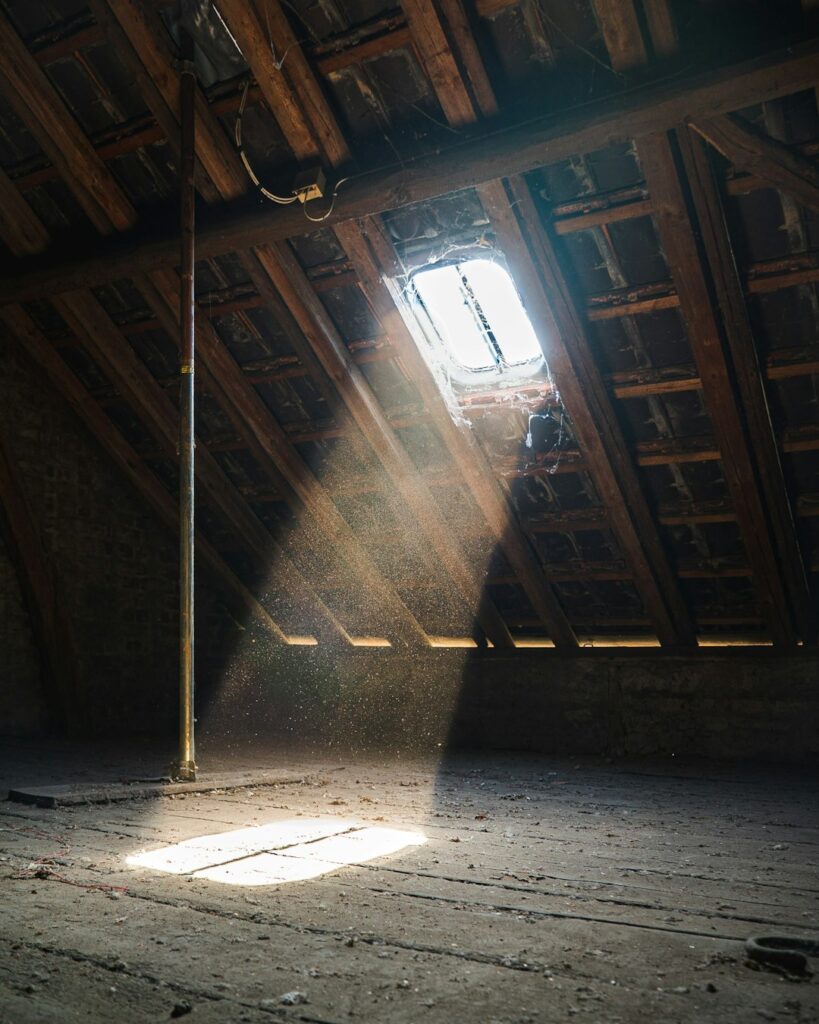
Why small roof problems rarely stay small
A minor roof problem can become a much more expensive building problem if water is allowed to keep moving through the roof system. A missing shingle, loose flashing, cracked seal, or clogged drainage path may not cause visible damage immediately, but repeated exposure to rain, snow, ice, wind, and temperature changes can enlarge the affected area.
In Hamburg, NY, roofs must handle several stressors over the course of a year. Winter freeze-thaw cycles can open small cracks, while wind-driven rain can enter beneath lifted roofing materials. Snow and ice may hide damage until melting water finds a path into the attic or upper floors.
The true cost of ignoring a roof problem is not limited to the price of repairing the roof covering. It may also include damaged insulation, weakened wood, interior repairs, mold prevention, electrical work, and disruption to the household.
How does roof damage spread?
Water rarely travels in a straight line. A leak that begins near a roof penetration or damaged shingle may run along roof decking, rafters, trusses, insulation, or wall framing before appearing as a ceiling stain. This can make the visible symptom seem unrelated to the original entry point.
Continued moisture can affect several layers:
- Roof covering: Shingles, panels, membranes, or underlayment may deteriorate further.
- Roof decking: Plywood or other structural sheathing can soften, swell, delaminate, or lose fastening strength.
- Framing: Rafters and trusses may weaken if wood remains damp for an extended period.
- Insulation: Wet insulation loses performance and may hold moisture against surrounding materials.
- Interior finishes: Ceilings, drywall, paint, trim, and flooring may stain, sag, swell, or require replacement.
- Ventilation components: Moisture can affect attic ventilation materials and contribute to condensation problems.
A ceiling mark that appears after a storm may represent a recent leak, but it may also be the latest visible sign of a problem that has been developing for weeks or months.
What can happen if a roof leak is ignored?
The most common result is a larger repair area. Water may move beyond one damaged section and affect adjacent materials that were originally in sound condition. As fasteners corrode or wood weakens, repairs can become more involved.
Long-term moisture also creates conditions that support mold growth. Mold does not require a dramatic flood. Persistent dampness in an attic, wall cavity, or around insulation may be enough. The health significance varies by person and circumstance, but people with allergies, asthma, or other sensitivities may notice problems sooner.
Another concern is hidden structural deterioration. Roof decking that feels solid from below may be compromised near fasteners, seams, valleys, chimneys, vents, or areas where water has repeatedly collected. If the damage reaches framing, the cost and complexity can increase substantially.
Water can also affect electrical components. Moisture near attic wiring, light fixtures, junction boxes, or ceiling-mounted equipment should be treated cautiously. Turning off power to an affected area may be appropriate, but electrical systems should not be handled in wet conditions unless the person doing so can do it safely.
Why winter conditions can make roof problems worse
Cold-weather damage is often difficult to evaluate from the ground. Snow can cover missing shingles, open seams, and damaged flashing. Ice can block drainage routes and force melting water beneath roofing materials. Repeated freezing and thawing may widen cracks in sealants, masonry, and metal components.
Heavy snow adds weight to the roof, although the amount of concern depends on roof design, snow density, drifting, previous accumulation, and the condition of the structure. Wet snow is substantially heavier than fresh, powdery snow. Warning signs can include unusual ceiling movement, new cracks, doors that suddenly bind, visible sagging, or loud structural sounds.
Roof work during icy or snowy conditions also creates fall hazards. Walking on a steep, wet, or snow-covered roof is unsafe for most homeowners. A ground-level inspection using binoculars can provide useful information without creating unnecessary risk.
Is a ceiling stain always an emergency?
A small, dry stain is not necessarily an emergency, but it should not be ignored. The urgency increases if the stain is expanding, wet, bubbling, sagging, or accompanied by dripping water, a musty odor, visible mold, or signs of electrical involvement.
Immediate precautions may include:
- Moving furniture and household items away from the affected area.
- Placing a container beneath active dripping.
- Avoiding contact with wet electrical fixtures or wiring.
- Photographing visible damage and recording when it appeared.
- Checking the attic only if it can be done safely and without stepping between framing members.
A ceiling that is bulging from trapped water may collapse without much warning. Standing directly beneath it is unsafe. If water is actively entering during a storm, temporary measures may reduce interior damage, but they do not replace a permanent assessment of the roof system.
How much can delayed maintenance add to the cost?
The price varies widely because roof damage is not measured only by the size of the original defect. A small opening may affect extensive materials if water has traveled or remained trapped. Delayed repairs can add costs in several categories:
- Removal and replacement of damaged roofing materials.
- Replacement of wet or deteriorated roof decking.
- Repair of rafters, trusses, or wall framing.
- Removal and replacement of insulation.
- Drying and cleaning of damp areas.
- Repair of ceilings, walls, flooring, and paint.
- Electrical inspection or repair.
- Treatment of mold or other moisture-related contamination.
- Temporary relocation or loss of use of part of the home.

Insurance coverage may also depend on the cause of the damage, policy language, documentation, and whether the condition is considered sudden, accidental, wear-related, or the result of deferred maintenance. Keeping dated photographs and written records can help establish how a problem developed, although documentation does not guarantee coverage.
Which roof warning signs deserve attention?
Some warning signs are easy to dismiss because they seem cosmetic. Others suggest that water or structural deterioration may already be present.
Watch for:
- Shingles that are missing, curled, cracked, or sliding out of position.
- Dark patches or exposed fasteners on the roof surface.
- Damaged flashing around vents, chimneys, skylights, or roof-wall intersections.
- Granules collecting in gutters or near downspout outlets.
- Sagging roof lines or uneven areas visible from the ground.
- Stains on attic insulation, rafters, ceilings, or upper walls.
- Musty odors that become stronger after rain.
- Water appearing around windows or walls near the roofline.
- Gutters that overflow during moderate rainfall.
- Repeated leaks in the same area after temporary patching.
Not every discoloration means the roof is failing. Asphalt shingles naturally change appearance with age, and attic condensation can mimic a roof leak. The location, timing, and pattern of the moisture matter.
When is an inspection a safety issue?
Roof inspection or temporary repair may require trained judgment when the roof is steep, icy, structurally damaged, or difficult to access. Safety concerns are especially serious after heavy weather, when hidden damage may affect the roof surface or supporting structure.
A qualified evaluation becomes particularly important when there is visible sagging, extensive water entry, suspected structural damage, mold affecting a large area, or moisture near electrical equipment. The purpose is not simply to identify a bad shingle. It is to determine whether water has reached the underlying roof assembly or the living spaces below.
For local households, the most useful approach is to treat early warning signs as evidence to investigate rather than proof that the entire roof must be replaced. Some problems are limited and repairable. Others become costly because moisture was allowed to continue moving through the structure.
How can homeowners reduce the chance of expensive damage?
Routine observation is more useful than waiting for a ceiling stain. After major wind, snow, or ice events, a ground-level check of roof edges, gutters, downspouts, and visible flashing can identify changes early. Attic spaces should be checked periodically for damp insulation, daylight through the roof deck, unusual odors, and water marks.
Keeping drainage paths clear also matters. Gutters and downspouts that cannot move water away from the building can contribute to overflow, saturated roof edges, and moisture near foundations or exterior walls.
The central lesson is straightforward: the cost of ignoring a roof problem is often determined by how far water travels before the problem is addressed. Early attention may involve a limited repair, while delayed attention can involve several building systems at once.
