
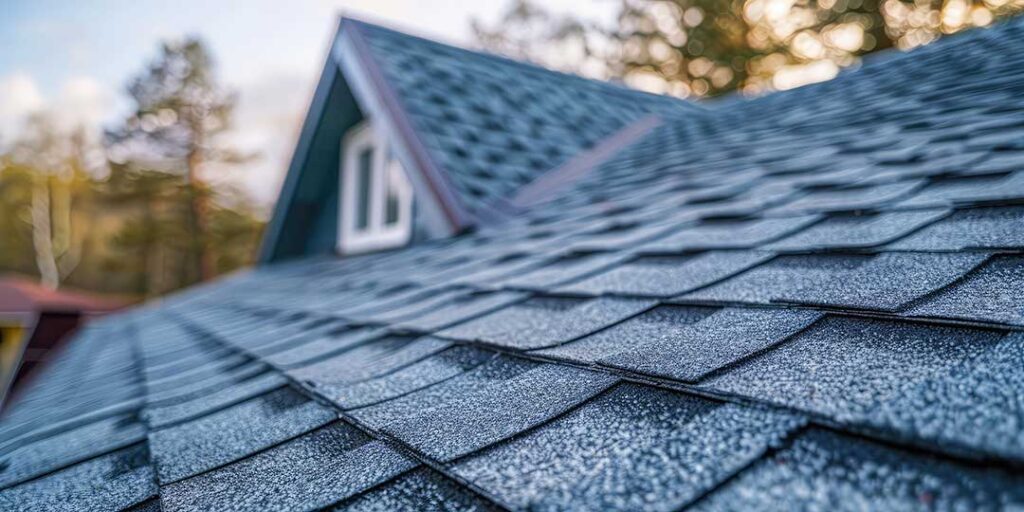
Hail damage is not always obvious from the ground. Some impacts leave clear dents or broken materials, while others weaken roofing surfaces without causing an immediate leak. For residents of Hamburg, NY, learning what to look for after a severe thunderstorm can help identify problems early and prevent additional interior damage.
What does hail damage look like on a roof?
Hail damage commonly appears as bruising, cracking, dents, exposed underlayment, or missing surface material. The exact signs depend on the roofing material, the size and hardness of the hail, wind speed, roof age, and the direction of the storm.
On asphalt shingles, possible damage includes:
- Dark or soft spots where hail struck the shingle
- Circular dents or depressions
- Cracked, split, or torn shingle surfaces
- Missing granules, especially in concentrated areas
- Exposed fiberglass mat beneath the shingle coating
- Shingles that are loose, lifted, or missing after strong wind
A damaged spot may not look dramatic. Pressing lightly near a suspected impact may reveal a soft area, but walking on the roof is unsafe and can cause additional damage. A view from the ground, attic inspection, or photographs taken from a safe location are better first steps.
How can hail damage be recognized from the ground?
Ground-level clues are useful, although they cannot confirm every type of roof damage. After a storm, check the yard, driveway, decks, window sills, and gutters for evidence of hailstones or roofing debris.
Look for:
- Freshly fallen granules collecting below downspouts
- Shingle pieces or fragments around the house
- Newly dented gutters, downspouts, flashing, or metal vents
- Dents in outdoor equipment or other exposed metal surfaces
- Broken branches or plants with shredded leaves
- Hailstones that were unusually large, dense, or covered the ground
A pattern of dents on metal components can support the possibility of roof damage. However, undamaged gutters do not prove that shingles are unharmed. Hail can strike roofing surfaces at an angle or affect one roof slope more than another.
Which parts of the roof are most likely to show damage?
The roof slope facing the direction of the storm often receives the most impact, but wind can carry hail across the entire structure. Edges, ridges, valleys, dormers, skylights, vents, and lower roof sections may also experience concentrated damage.
Pay particular attention to:
- Roof edges and ridge caps
- Areas around chimneys, vents, and skylights
- Metal flashing
- Shingles beneath overhanging branches
- Lower roof sections near gutters
- Detached garages, sheds, and porch roofs
On homes with additions or multiple roof elevations, some sections may be affected while others remain intact. A quick inspection of only the most visible roof area can miss damage on a less noticeable slope.
What does hail damage look like on different roofing materials?
Roofing materials do not all respond to hail in the same way. Asphalt shingles may show bruising or granule loss, while metal roofing may develop visible dents without losing its protective coating. Older materials can be more brittle and may crack more easily.
Wood shingles and shakes may split, fracture, or show impact marks. Flat roofing membranes can develop punctures, tears, or depressions that hold water. Clay, concrete, or other rigid roofing products may crack or break.
Age also matters. A roof that already has weathering, curling, loose granules, or brittle shingles can be difficult to evaluate after a storm because older wear may resemble hail damage. The location, shape, and freshness of the marks help distinguish storm impacts from ordinary aging.
Can hail damage cause a leak later?
Yes. Hail damage may not produce an immediate leak. A shingle can lose protective granules or develop a small fracture while still shedding water during the next light rain. Later, repeated wetting, freezing, thawing, and wind can enlarge the weak area.
Hamburg’s seasonal weather can make delayed problems more noticeable. Moisture that enters beneath damaged roofing may remain hidden until heavy rain, melting snow, or freeze-thaw movement exposes a weak point. Water stains on ceilings or upper walls may appear well after the original storm.
Watch for:
- Brown or yellow ceiling stains
- Damp attic insulation
- Musty odors
- Peeling paint near upper walls
- Drips around light fixtures or roof penetrations
- Daylight visible through the roof deck in the attic
Water does not always appear directly beneath the damaged shingle. It can travel along rafters, insulation, or roof decking before reaching the interior.
How is hail damage different from normal roof wear?
Normal aging tends to develop gradually across broad areas. Hail damage is more likely to appear as scattered, localized impacts or a pattern of dents and bruises. Storm damage may also be accompanied by fresh granule piles, bent metal, broken branches, or debris.
Common signs of aging include:
- Uniform granule loss across much of the roof
- Curling or cupping along shingle edges
- General discoloration from long-term exposure
- Widespread brittleness
- Algae or moss growth
- Repeated repairs in older areas
The two conditions can occur together. A roof may have ordinary age-related wear and new hail impacts from the same storm. Distinguishing between them may require close inspection, especially when the surface has already weathered for many years.
Should the attic be checked after a hailstorm?
The attic can reveal damage that is not visible from outside. From a safe position, look at the underside of the roof decking for dampness, staining, darkened wood, rusted fasteners, or small areas where daylight is visible.
Do not climb onto unstable framing or move across loose insulation without proper support. Attic spaces may contain exposed nails, electrical wiring, poor ventilation, or limited footing. If there is active dripping, turn off electricity to affected fixtures only if it can be done safely and keep clear of wet electrical components.
Photographs of interior evidence can help document when and where the problem was noticed. A simple record of the storm date, visible damage, and any leaks may also be useful for maintenance and insurance documentation.
What should be done immediately after suspected hail damage?
Start with safety and documentation. Avoid climbing onto the roof, especially when shingles are wet, surfaces are steep, or debris remains present.
Practical steps include:
- Photograph visible damage from the ground
- Record the date and approximate time of the storm
- Note any leaks, ceiling stains, or attic moisture
- Keep damaged pieces or debris if they can be collected safely
- Use a temporary container under an active interior drip
- Move belongings away from water, but avoid walking beneath sagging ceilings
- Arrange a qualified roof inspection when damage may affect safety or weather protection
Temporary coverings may reduce water entry, but they must be installed safely and without creating additional holes or hazards. Persistent leaking, exposed roof decking, or loose sections should be treated as more urgent than cosmetic dents.
Does every hailstorm damage every roof?
No. Hail size alone does not determine the outcome. Wind speed, storm direction, roof pitch, material condition, roof age, and the duration of the storm all influence the result. Two neighboring houses may show different levels of damage after the same event.
Likewise, a roof can appear intact immediately after a storm and still contain hidden damage. A careful exterior and attic review is more reliable than judging the roof solely by whether water is leaking.
Recognizing the difference between storm impact, ordinary weathering, and urgent structural problems helps residents make sensible decisions after severe weather. Early documentation and a safe inspection can identify vulnerable areas before the next period of heavy rain, snow, or freezing temperatures.
